Are Your Leggings Supposed to Feel Tight When You Put Them On?
Quick Answer: Yes — properly fitted leggings should feel snug and require a moment of pulling on, because the fabric is engineered to stretch 15 to 25 percent below body dimensions so it holds shape through movement. But snug is different from restrictive: if you cannot squat without the waistband rolling, cannot slide two fingers under the waistband, or see indentation marks lasting more than 20 minutes, the size is wrong.
You put them on and there is a moment of genuine effort. Then they settle and feel great.
Or: you put them on, they feel great, and by hour three they are pooling at the knee and sagging at the seat.
Both experiences are extremely common, and the difference between them starts at the moment you pull them on.
How tight should leggings actually feel at the waistband?
The two-finger test settles it. Standing relaxed, you should be able to slide two flat fingers between the waistband and your body — with resistance, but without forcing.
One finger or none: too tight. Expect digging, a visible line, and discomfort after eating or sitting for long stretches.
Three or more fingers: too loose. This one causes the roll-down, because a waistband that is not gripping migrates down until it hits a place where it can grip.
The waistband is also where sizing decisions go wrong most often, because it is the part of the leg where our proportions vary the most from a size chart. A pair can fit your thighs perfectly and be wrong at the waist, which is why high-rise fits with a wider band solve so many complaints. The wider band spreads pressure over more surface, which feels less tight at the same actual compression.
Why do leggings that feel perfect in the morning sag by afternoon?
Because fabrics relax under body heat and repeated stretch. Every legging does this to some degree — the question is how much and whether it recovers.
Normal relaxation: a small amount of give in the first 30 minutes, then stable for the rest of the day, with full recovery after washing.
A fit problem: progressive sagging through the day, requiring repeated hikes at the waist, with fabric bunching at the knee and back of the ankle.
A fabric problem: the pair no longer recovers after washing, and it starts the day already loose. That is spandex degradation, usually accelerated by heat drying or fabric softener.
If a new pair sags within an hour, size down. If a pair you have owned for a year sags, it is at end of life — spandex has a working lifespan of roughly one to two years of regular wear, and no amount of washing brings it back.
Does squatting in the fitting room actually tell you anything?
It is the single most informative thing you can do, and it takes eight seconds. Run three checks:
The squat test. Go to full depth. Watch for: sheerness at the seat, the waistband rolling down at the back, and the seam pulling uncomfortably. Any sheerness at all means the fabric is being stretched past its opacity threshold — that pair is too small or too thin, and it will only get worse as it relaxes.
The lunge test. Deep forward lunge. The knee area should stretch and return without leaving a bagged-out pocket. If the fabric stays distorted, recovery is poor.
The forward fold. Bend at the hips. The waistband should stay in place. A band that slides down here will slide down on every hinge you do all day.
If a pair passes all three and still feels tight standing still, that is usually correct compression settling in rather than a wrong size.

What does compression actually do, and do you need it?
Compression describes how much the fabric pushes back against your body, and it is a spectrum, not a feature you either have or do not.
- Light compression: comfortable, forgiving, good for lounging, walking, and yoga. Less shape retention over a long day.
- Medium: the versatile middle. Holds shape, smooths, still comfortable for hours. This covers most people for most uses.
- High: noticeably firm, holds everything in place, best for running and high-impact work. Genuinely uncomfortable for sitting through a long meal.
Claims about performance benefits from compression garments are mixed in the research — real effects tend to be modest and most reliably reported for recovery and perceived soreness rather than performance. Buy compression for how it feels and how it holds shape, not for a promised performance edge.
Practical rule: high compression for anything with impact, medium for everything else, light for anything you will sit in for more than two hours.
How do you handle sizing between brands?
You do not, in the sense that there is no consistent translation. A size 8 in one brand is a 6 in another and a 10 in a third, and this is not going away.
What actually helps:
- Measure your waist and hip and use the brand’s own chart, every time. Ignore what size you usually wear.
- When between sizes, size down for high compression and up for light. The compression level changes the answer more than the measurement does.
- Check the inseam number, not the length name. Full length means different things at 5’2 and 5’9.
- Read reviews for the phrase runs small. Crowd data on fit is more reliable than most size charts.
Keep a note on your phone with the brands, sizes, and inseams that worked. It sounds excessive and it saves an enormous amount of return shipping.
FAQ: Legging Fit Questions, Answered
Should leggings leave marks on my skin?
A faint line that fades within 10 to 20 minutes is normal. Deep indentations, or marks lasting an hour, mean the fit is too tight.
Is it bad to wear compression leggings all day?
For most people it is fine, though high-compression pairs worn for very long stretches can be uncomfortable and may aggravate certain circulation or nerve issues. If you get numbness or tingling, change out of them.
Why are my leggings see-through only when I squat?
Because stretch reduces yarn density. It means the fabric is at the edge of its opacity range in that position — a thicker fabric or a size up fixes it, and washing will not.
TL;DR:
- Snug on the way on is correct; fabric is engineered below body dimensions on purpose
- Two fingers under the waistband is the fit standard
- Squat, lunge, and forward fold before buying — sheerness or a rolling waistband is a hard no
- Size down for high compression, up for light, and always use the brand’s own chart
Do the two-finger test on the pair you are wearing right now. If it is three fingers, you have found the reason they keep rolling down.
See It in Motion
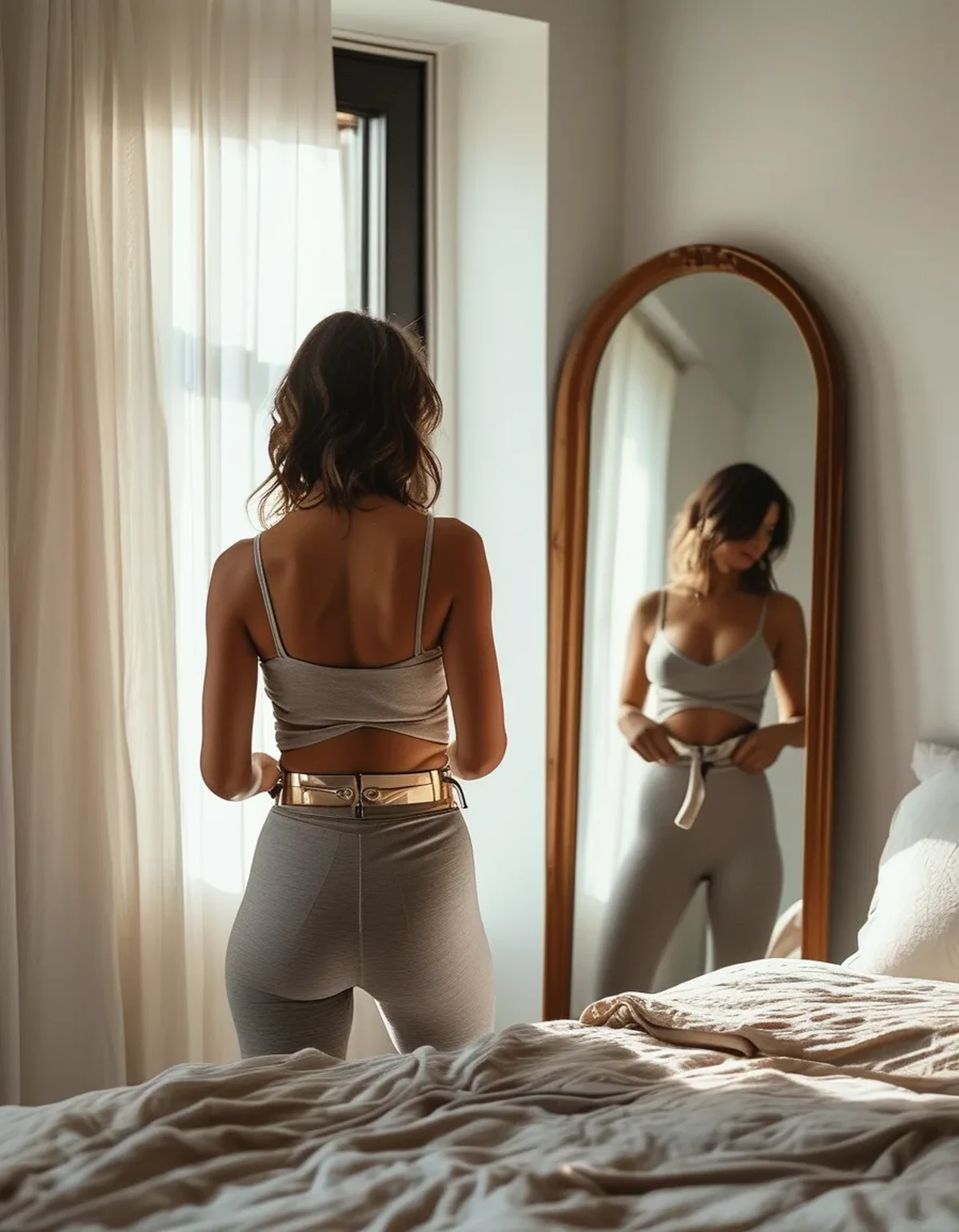
Seen here: High Waist Yoga Leggings with Side Pockets — shop it on bubblelime.com
Keep Reading
This article is for general informational and styling purposes only. Fit, sizing, and product availability may vary.