Are Thicker Leggings Actually More Durable, or Just Heavier?
Quick Answer: Fabric thickness and durability are related but not the same thing — thicker fabric often does resist pilling and see-through longer, but the fiber blend, weave density, and stitching quality matter more than raw weight, so a thinner, well-engineered legging can outlast a thick, poorly constructed one.
Grabbing the heaviest-feeling pair on the rack as a durability shortcut skips the factors that actually determine how long leggings last.
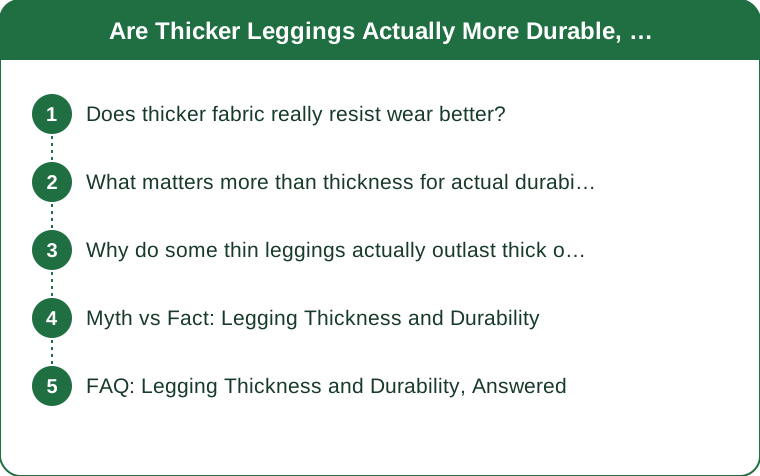
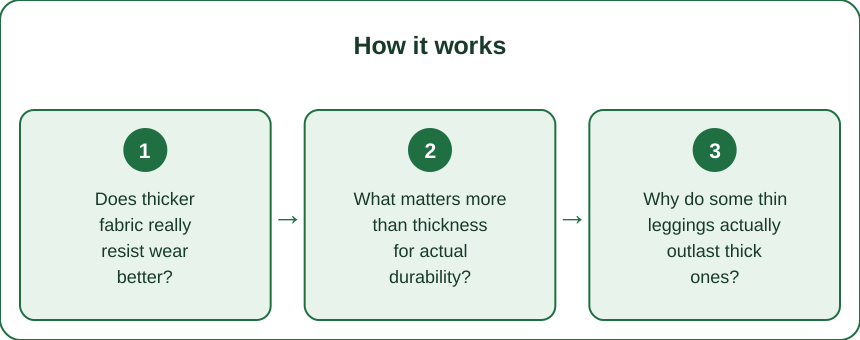
Does thicker fabric really resist wear better?
Generally, yes, to a point — thicker fabric has more material to abrade before thinning out or developing see-through spots, particularly in high-stress zones like the inner thighs and seat. But thickness alone doesn’t guarantee quality if the underlying fiber and weave are weak.
What matters more than thickness for actual durability?
Fiber blend
A higher percentage of nylon relative to spandex generally holds shape and resists pilling better over time than cotton-heavy or low-nylon blends.
Weave density
A tightly woven, high-denier fabric resists pilling and thinning even at a moderate thickness — density matters as much as raw thickness.
Stitching
Flatlock or bonded seams at stress points (crotch, inner thigh) often fail before the fabric itself does, regardless of how thick the material feels.

Why do some thin leggings actually outlast thick ones?
A thin, high-denier, well-woven fabric with reinforced seams can outlast a thick but loosely-woven, low-denier pair — thickness is a rough proxy for durability, not a guarantee. This is why price and brand reputation for construction quality often predict longevity better than fabric weight alone.
Myth vs Fact: Legging Thickness and Durability
Myth: Squat-proof automatically means thick. Fact: Squat-proof (opacity under stretch) depends more on weave density and fiber opacity than raw thickness — some thinner fabrics pass squat tests fine.
Myth: Thick leggings are always warmer and less breathable. Fact: This is generally true, which is a real tradeoff worth considering — thickness for durability can come at the cost of breathability for hot workouts.
Myth: You can’t tell fabric quality without wearing them for months. Fact: A quick stretch-and-release test in the fitting room (checking if fabric snaps back without visible thinning or pilling) reveals a lot upfront.
FAQ: Legging Thickness and Durability, Answered
How can I check fabric quality before buying?
Stretch a small section between your fingers — if it thins out and becomes see-through easily, that’s a preview of how it’ll wear over time.
Do more expensive leggings always mean more durable?
Generally trends that way due to better fiber blends and construction, but it’s not absolute — check specific fabric composition rather than relying on price alone.
Should I choose thick leggings for high-intensity workouts specifically?
For squat-heavy or high-friction workouts, a denser weave (not necessarily maximum thickness) tends to perform and last best.
TL;DR:
- Thicker fabric resists wear to a point, but it’s not the full durability picture
- Fiber blend, weave density, and stitching quality matter as much or more than thickness
- A thin, well-woven, well-stitched legging can outlast a thick, loosely-made one
- A quick stretch-and-release test in the fitting room reveals real quality upfront
Why do seams matter more than most people expect?
Because reinforced flatlock or bonded seams at the crotch and inner thigh are frequently the actual failure point — the fabric between them can look pristine while the seam has already given out.
See It in Motion
Seen here: Super High Waist Embossed Yoga Leggings with Inner Pocket — shop it on bubblelime.com
Keep Reading
This article is for general informational and styling purposes only. Fit, sizing, and product availability may vary.