Are Expensive Leggings Actually Worth It? A Straight Q&A
Quick Answer: Yes for some things, no for others. What money reliably buys: better opacity in the squat, seam construction that doesn’t fail, elastane quality that resists sagging, and consistent sizing. What it doesn’t reliably buy: compression claims, magic fabrics, or longer life if you wash them badly. The sweet spot for most people is the mid-tier, not the top — the biggest quality jump happens well below the premium price point.
The honest answer isn’t “expensive is better.” It’s that the price-to-quality curve flattens much earlier than the marketing suggests.

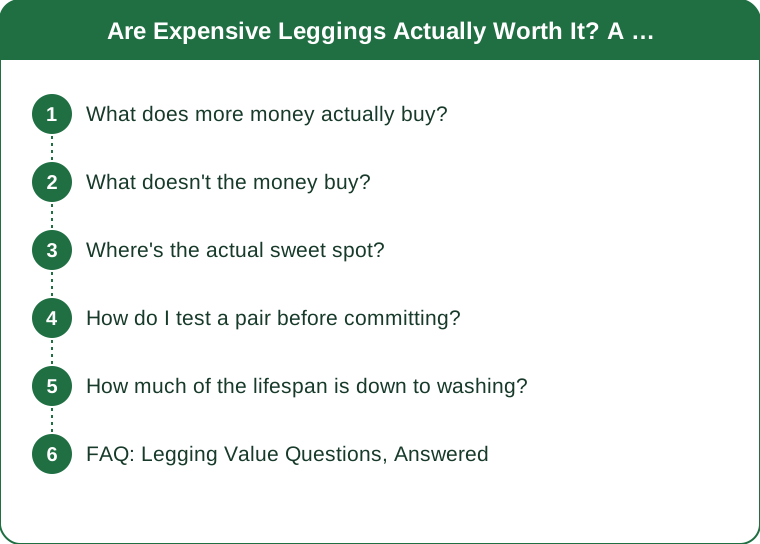
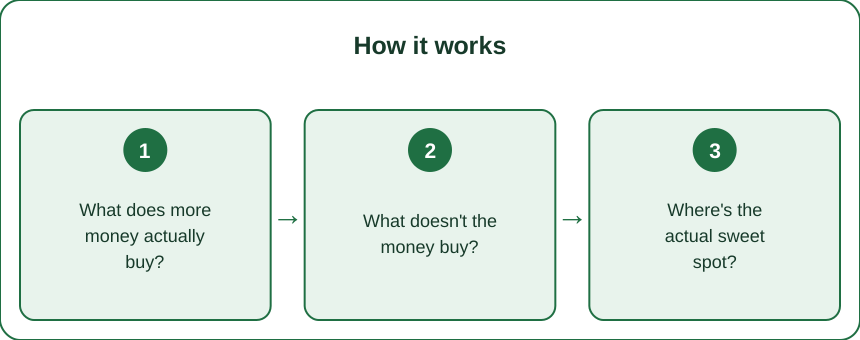
What does more money actually buy?
Four things that are real and measurable.
Opacity under stretch. This is the single biggest genuine differentiator. Cheap fabric thins when stretched over the glutes and becomes sheer. Denser knit and higher-quality yarn maintain opacity — and this is testable in a fitting room by squatting in front of a mirror.
Seam construction. Flatlock seams, bonded seams, and gusseted crotches cost more to produce. The crotch gusset in particular — a diamond-shaped panel instead of a four-seam intersection — dramatically reduces the most common failure point.
Elastane quality and content. Elastane degrades over time, faster with heat and chlorine. Better fibers hold recovery longer, which is the difference between leggings that still fit at month 12 and ones that sag by month 3.
Sizing consistency. Premium brands generally have tighter manufacturing tolerances, so the same size fits the same way across pairs and across production runs.
Waistband construction deserves a mention — a wide, multi-panel, properly-constructed waistband is genuinely different from a folded-over elastic casing, and it’s why some leggings roll and others don’t.
What doesn’t the money buy?
More than you’d hope.
Compression claims are mostly unregulated in activewear. Medical graduated compression is a measured, specified thing. “Compressive” leggings are not measured against any standard, and a snug fit is not the same as therapeutic compression.
Proprietary fabric names are largely marketing. Most performance knits are variations on nylon-elastane or polyester-elastane blends. The differences in hand feel are real; the implied technological gap usually isn’t.
Sweat-wicking is table stakes now. Essentially every synthetic activewear fabric wicks. Paying a premium for it specifically buys nothing.
Durability isn’t guaranteed by price. How you wash them matters more than what you paid — heat destroys elastane regardless of brand.
And fit is personal, not tiered. An expensive pair that doesn’t match your proportions performs worse than a cheap pair that does. Rise height, inseam, and waistband width relative to your torso length are what determine comfort, and no price point solves that for everyone.
Where’s the actual sweet spot?
Mid-tier, and the reasoning is about where the curve flattens.
The jump from budget to mid-tier is large. You’re going from thin fabric with basic seams to dense fabric with gussets and flatlock construction. That’s where most of the real quality difference lives.
The jump from mid-tier to premium is much smaller and increasingly about brand, design, and refinement rather than function.
Buy fewer, better. Three good pairs beat eight mediocre ones — you’ll wear the good ones and the mediocre ones will sit in a drawer.
Buy the expensive pair for the demanding use. Hot yoga, heavy lifting, and long runs expose fabric weaknesses. Lounging and walking don’t. Match the spend to the demand.
End-of-season sales are where premium becomes mid-tier priced. Colors change; construction doesn’t.

How do I test a pair before committing?
Four checks, all doable in a fitting room in two minutes.
The squat test. Squat deep, facing a mirror, and look. If you can see skin tone or underwear through the fabric, that’s your answer regardless of price. Do this every time — the same brand can vary by color, and light colors are consistently thinner.
The waistband test. Bend forward, then stand. Does the waistband stay? Then walk a few steps and check again. Rolling and sliding are almost always a waistband construction issue, not a size issue.
The seam test. Look at the crotch. Is there a gusset — a separate diamond or triangular panel — or do four seams meet at a point? Four seams meeting at a point is the most common blowout location in the entire garment.
The recovery test. Pull the fabric firmly and release. It should snap back with no visible distortion. Slow recovery on a brand-new pair predicts sagging within months.
Then read the composition tag. Look for elastane content around 15 to 25% for supportive training leggings. Much lower and they’ll sag; much higher can feel restrictive.
How much of the lifespan is down to washing?
A lot — this is genuinely where most leggings die.
Heat is the enemy of elastane. Hot water and, far worse, tumble drying degrade the elastic fibers permanently. Air drying is the single highest-impact thing you can do, and it’s free.
Fabric softener coats fibers and reduces wicking. It also builds up and traps odor — the opposite of the intended effect. Skip it entirely for activewear.
Wash cold, inside out, in a mesh bag. Inside out protects the outer surface from abrasion; the bag prevents snagging on zippers and hooks.
Don’t over-wash. Leggings worn for light activity don’t need washing after every wear. Airing them out is often enough, and fewer wash cycles means longer life.
Chlorine destroys elastane rapidly. If you wear them in a pool or hot tub, rinse immediately in cold water.
Realistic lifespan with good care: 2 to 3 years of regular use for a well-made pair. With hot washing and tumble drying: often under a year, at any price.
FAQ: Legging Value Questions, Answered
Why do the same size leggings fit differently across brands?
There’s no standardized sizing in activewear, and brands fit to different body models with different intended compression levels. A brand’s fit consistency within itself is more useful than the number on the tag. Once you find a brand that matches your proportions, it’s usually worth staying.
Are squat-proof claims meaningful?
They’re not a regulated term, so the claim itself means nothing. The test does. Squat in front of a mirror before buying — that’s the only reliable check, and it takes ten seconds.
Should I size up or down?
Generally take your true size. Sizing down for extra compression stresses seams and accelerates fabric thinning, which produces sheerness. Sizing up leads to sliding and rolling. If you’re between sizes, consider which failure mode bothers you more.
Do leggings stretch out permanently?
Good ones recover with washing. Persistent bagging at the knees or seat means the elastane has degraded — usually from heat — and it isn’t reversible. That’s the point at which a pair is genuinely finished.
TL;DR: Price buys some real things and several imaginary ones.
- Real: opacity under stretch, gusseted crotch and flatlock seams, elastane quality, sizing consistency, waistband construction.
- Not real: compression claims (unregulated), proprietary fabric names, wicking (universal now), guaranteed durability.
- The sweet spot is mid-tier. The big quality jump happens below the premium price point.
- Test in the fitting room: squat in front of a mirror, bend and check the waistband, look for a crotch gusset, pull and release for recovery.
- Washing determines lifespan more than price. Cold, inside out, no softener, air dry.
An expensive pair that doesn’t fit your proportions performs worse than a cheap pair that does.
See It in Motion
Seen here: High Waist 8” Yoga Shorts — shop similar styles on bubblelime.com
Keep Reading
This article is for general informational and styling purposes only. Fit, sizing, and product availability may vary.